
Surreal landscapes shaped by an active volcano
At the foot of the majestic Ol Doinyo Lengai volcano in northern Tanzania lies one of the most surreal landscapes in East Africa — Lake Natron. This shallow, soda-rich lake spans over 1,000 km² (400 sq mi), yet rarely reaches more than 3 meters (10 ft) in depth. Its size and appearance shift dramatically with the seasons, creating an ever-changing mosaic of colors and textures.
Unique, highly alkaline chemical conditions give the lake a striking, often blood-red hue and contribute to its eerie reputation. Animals that perish in the lake’s waters are sometimes naturally preserved by the mineral-rich environment, giving rise to tales of a “petrifying” lake.
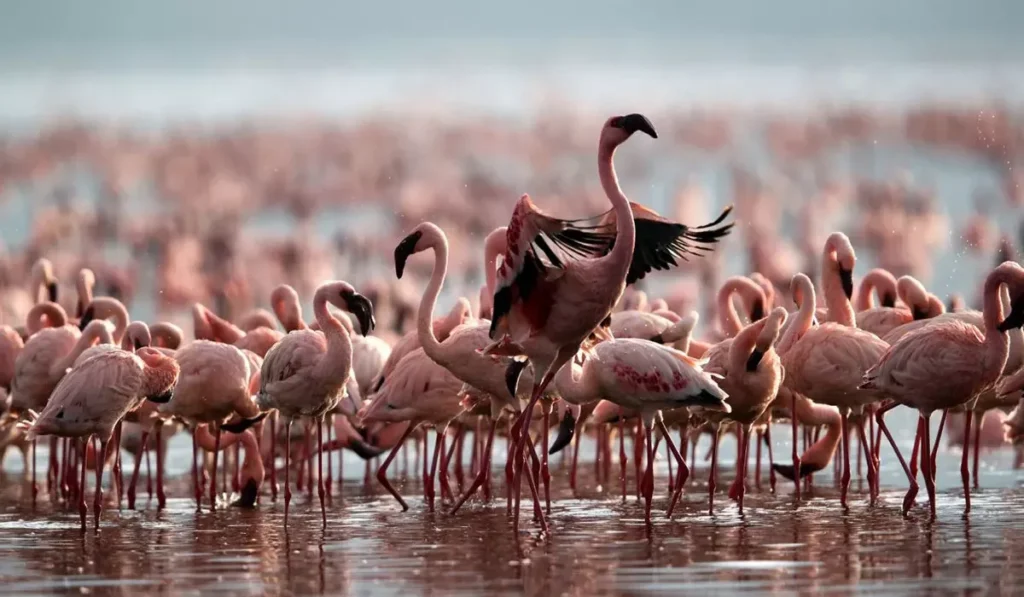
Despite its harshness, Lake Natron plays a vital ecological role. Every dry season, millions of lesser flamingos flock here to breed, drawn by the lake’s abundant food supply and relative safety from predators. Their pink silhouettes against the crimson shallows create one of the most iconic natural spectacles in Tanzania.
Lake Natron is located in northern Tanzania, near the border with Kenya, within the eastern branch of Africa’s Great Rift Valley. It sits at the base of the active volcano Ol Doinyo Lengai, approximately 75 miles (120 kilometers) northwest of Arusha, Tanzania.
Lake Natron isn’t a national park, but it’s a vital ecological and geological site. Conservation organizations protect its surrounding areas, especially the fragile nesting grounds of lesser flamingos — the lake’s seasonal residents.
Estimates suggest that between 2 and 3 million lesser flamingos nest here — accounting for around 75% of the global population. Greater flamingos and other bird species also visit, but in much smaller numbers.
Even though the lake’s waters are extremely alkaline and can reach up to 38°C (100°F) during the dry season, Lake Natron remains the main nesting site for lesser flamingos in East Africa. So how do they thrive in such hostile conditions and come to breed here after feeding at soda lakes across eastern Africa?
In the blistering heat of Lake Natron, flamingo chicks gather in massive crèches — crowds of thousands of downy youngsters watched over by a few adult “guards” while the rest of the colony forages. On this shimmering crust of salt and soda, the chicks’ soft gray plumage contrasts starkly with the neon pink of their parents, creating a scene that feels more extraterrestrial than earthly.
These birds are remarkably adapted. Their tough skin and thick, scaly legs protect them from chemical burns. They also have specialized glands in their heads that filter out salt, which is then expelled through their nostrils. In fact, the lake’s harsh environment deters most predators, making it a relatively safe haven for flamingos.
The waters of Natron are rich in algae, a primary food source for flamingos. Tilapia fish also live here — mainly near the hot spring inlets, where the water is less salty. And there’s an abundance of brine shrimp (Artemia salina), tiny creatures that feed on microscopic algae. These algae contain carotenoids — pigments that, through the shrimp, turn flamingo feathers pink.
During the rainy season, rainfall dilutes the lake’s salinity just enough for successful breeding.
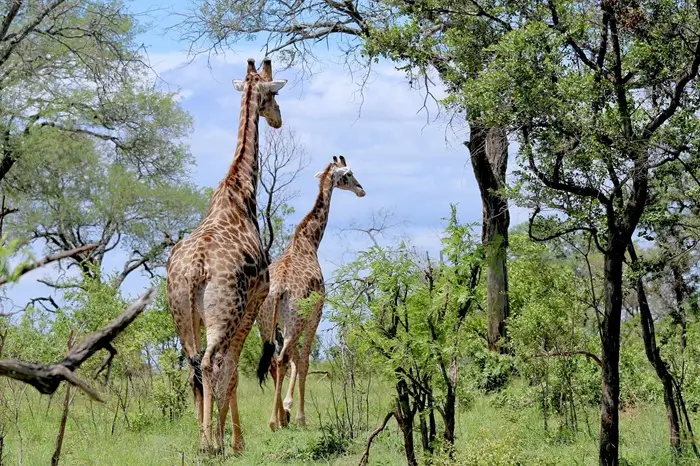
Beyond flamingos, the area around Lake Natron supports a variety of wildlife uniquely adapted to its harsh environment. Visitors might encounter zebras, giraffes, and wildebeests traversing the surrounding plains, while smaller mammals such as dik-diks and Grant’s gazelles find refuge among the region’s sparse vegetation.
Birders will also appreciate the diversity of other bird species inhabiting the area. Raptors, including the Verreaux’s eagle and Egyptian vulture, patrol the skies, while waders like the chestnut-banded plover and numerous migratory shorebirds frequent the shoreline, making Lake Natron a rewarding destination for bird enthusiasts.
You can visit year-round, though travel during the rainy season can be tricky due to washed-out roads. Several eco-camps are nearby for travellers exploring both the lake and Ol Doinyo Lengai volcano. Recommended time to visit Lake Natron: July through November.
The Maasai communities around Lake Natron have adapted to a land few would call hospitable. Herding cattle across dry plains and volcanic slopes, they navigate an environment shaped by alkaline waters, shifting heat, and the quiet presence of Ol Doinyo Lengai. Their traditions remain deeply tied to this landscape — from seasonal movements to spiritual reverence for the volcano, seen not as a threat, but as a living part of their world.
Yes, there are fish in Lake Natron, though only a few species can tolerate its extreme conditions. These include several types of alkaline tilapia, such as Alcolapia alcalica, Alcolapia latilabris, and Alcolapia ndalalani — all considered endemic fish species.
They survive in small freshwater pools and streams along the lake’s edges, where conditions are less harsh than in the open water. Their presence highlights how even highly alkaline environments can support specialized life forms.
No human deaths have been officially linked to Lake Natron, but it still poses certain risks.
The most serious incident happened in 2007 when Australian journalists were flying over the lake in a helicopter. The pilot lost control and crashed into the water. One crew member broke a leg, another fractured a hip, and a third reported eye damage from the water. Thankfully, all nine people on board survived, thanks to a swift rescue.
This incident proved that Lake Natron doesn’t turn living beings to stone on contact—but without quick help, injuries from chemical exposure or drowning could have been fatal. A submerged body would eventually be mummified by the lake’s salts.
Lake Natron is not safe for swimming due to its extremely alkaline waters (with a pH similar to ammonia), high temperatures, and sharp, salty crusts that can harm the skin. While it's a breathtaking, unique natural site, it's best admired from the shore. Swimming is strongly discouraged due to potential health risks and to protect the lake’s fragile ecosystem.
Some land around the lake is used for livestock and seasonal farming. The government plans to develop agribusiness here poses a serious threat to Lake Natron’s delicate balance.
If forests are cleared and a hydroelectric dam is built on the lake’s only feeding river, it could lead to the lake drying up entirely — devastating the ecosystem and destroying this natural marvel. Even with a proposed dam to retain freshwater, it won’t be enough to prevent changes to the lake’s pH.
Another looming threat is a planned sodium carbonate processing plant. The mineral is used in fertilisers, heat-resistant glass, and cleaning agents. More than 50 East African environmental organisations have joined forces to protect Lake Natron in a large-scale campaign. While the project is still under discussion, it's unclear whether conservationists will succeed in stopping this environmental risk.
We are always here to help.