
Route summary, challenge level, success probability, schedule, and professional advice
Lemosho is a classic trekking route that has become increasingly popular in recent years—and for good reason. It combines stunning landscapes, an excellent acclimatization profile, and some of the highest summit success rates of all Kilimanjaro routes. Beginning on the mountain’s western slope, Lemosho can be completed in 6, 7, or 8 days.
One of its highlights is Cathedral Peak, a striking point of the Shira Plateau that rises to 3,872 m (12,703 ft). Trekkers often take an acclimatization hike there, rewarded with some of the finest views of Kilimanjaro. Another remarkable feature of Lemosho is the presence of giant, otherworldly plants—Dendrosenecio kilimanjari—which grow only on this mountain.
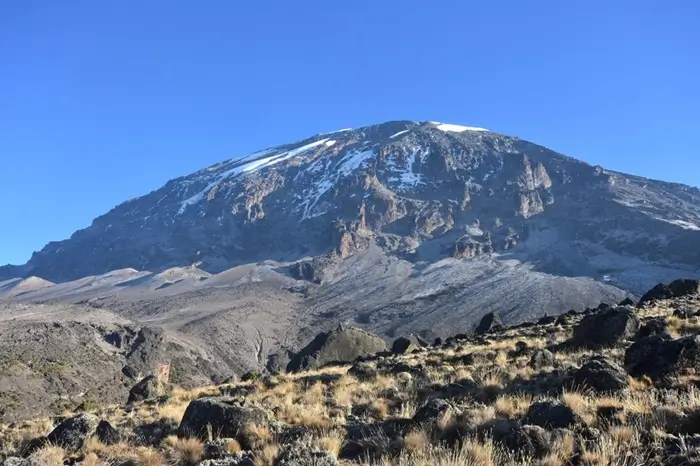
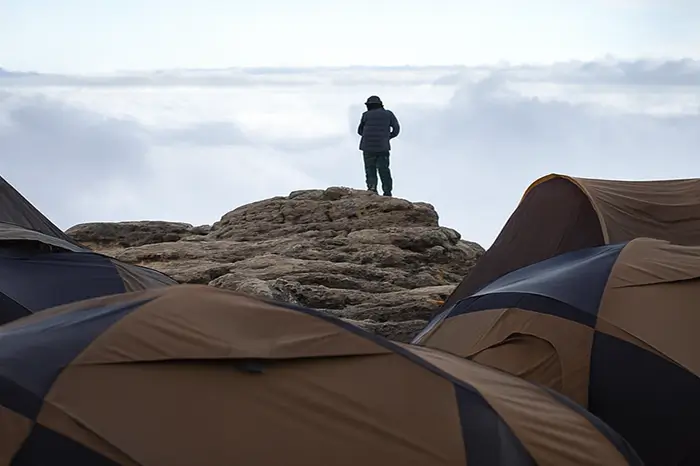
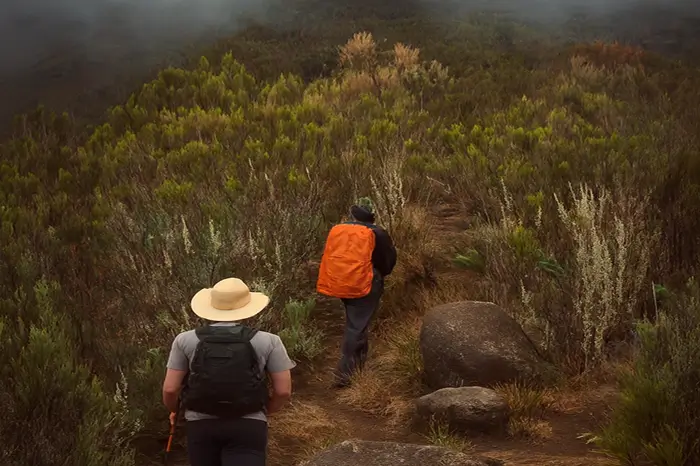
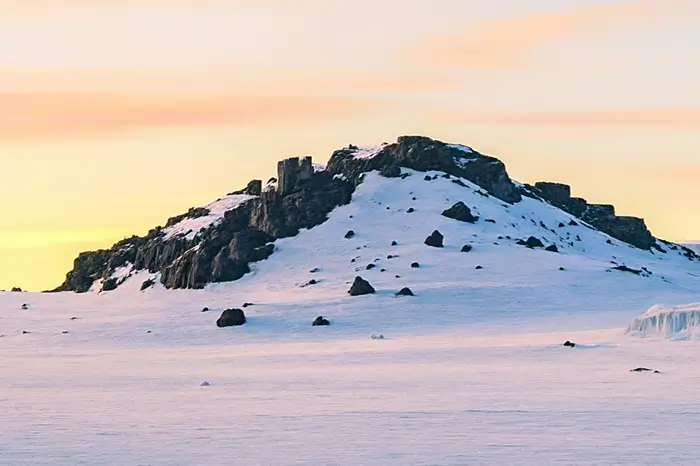
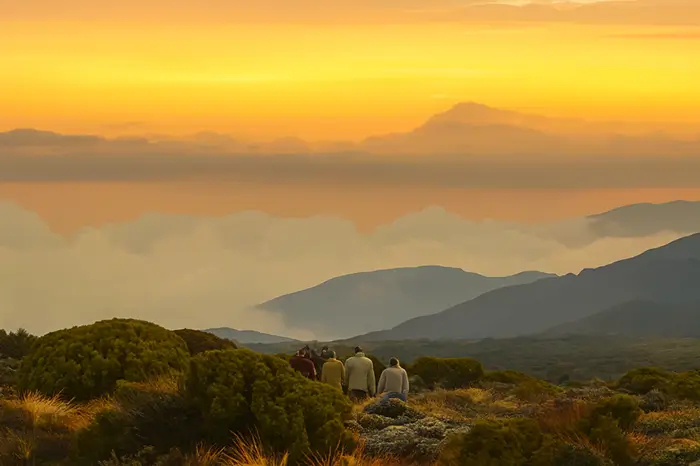
Lemosho is considered the top choice. Its breathtaking landscapes and smooth acclimatization profile make it the preferred route for those attempting Kilimanjaro for the first time.
There are three itinerary options available: 6, 7, and 8 days. Climbers often ask which one is most suitable. A general guideline is:
6-Day Itinerary: Best suited for individuals with prior high-altitude experience above 4,000 m (13,100 ft). To attempt the 6-day Lemosho trek, it’s recommended to have completed a multi-day hike at this elevation within three months before the Kilimanjaro climb.
7-Day Itinerary: Designed for trekkers with general hiking experience but limited or no exposure to high altitude. You’ll skip the tropical forest approach, as a vehicle transports you directly to 3,414 m (11,200 ft). The first two days involve relatively easy hikes with gradual altitude gain, helping preserve strength for the more demanding stages.
This is the most popular version of the Lemosho route, chosen even by many without prior trekking experience, and it has high summit success rates. Over half of the climbs are organized on this 7-day plan.
8-Day Itinerary: Recommended for those who are new to trekking or haven’t been active in the mountains for some time. It provides the best chance of reaching Uhuru Peak, as the additional day at the start enhances acclimatization and eases the transition into the trekking rhythm.
Unlike the shorter options, the 8-day Lemosho trek begins in the lush tropical forest, adding more scenic variety.
Whichever itinerary is chosen, Kilimanjaro requires at least a moderate level of fitness – even for the beginner-friendly 8-day route. More details on preparing physically can be found in the training guide for Kilimanjaro.
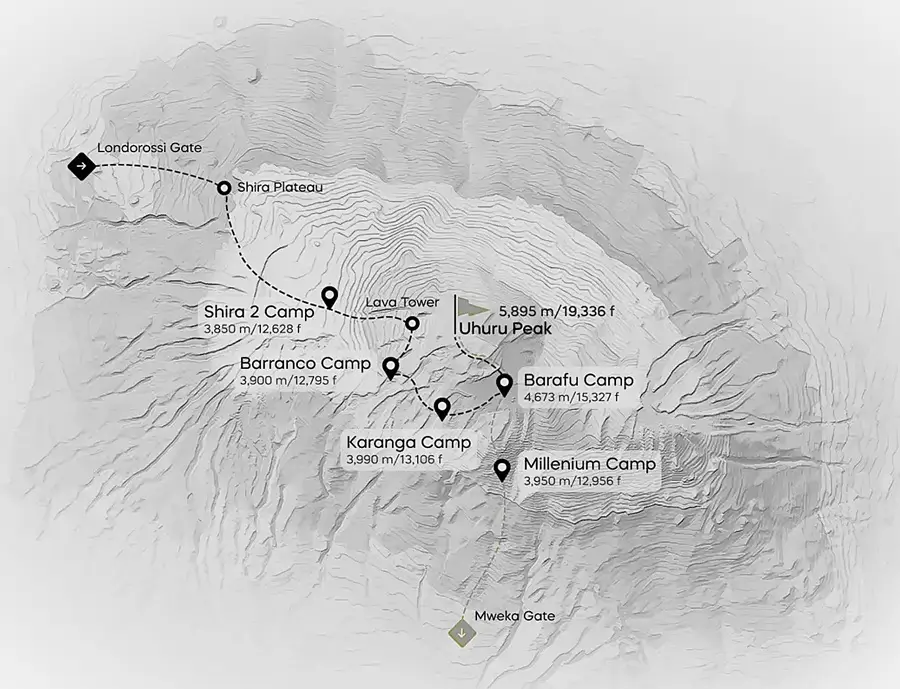
Arrival at Kilimanjaro International Airport (JRO), where you will meet a Tanzania Bucket List representative, and transfer to the hotel under the rate. The hotel will provide all the essentials for a comfortable stay: cozy rooms, hot water, polite staff, a swimming pool, and Internet access. In the evening there will be a briefing with our managers, who will also make sure you are ready to begin the climb.
Private tour packages include shared airport transfers for your group. Extra charges will apply for additional individual transfers. To avoid extra costs, sync your group's arrival and departure times.
📒 PLEASE NOTE: Check-in starts at 2:00 PM.
A guide and a mountain support crew will arrive at the hotel. Then you will travel by vehicle (roughly 3–4 hours) to Kilimanjaro National Park's western entrance: Londorossi Gate. After the quick formality of acquiring climbing permits and registering with the search and rescue service, the group continues upwards towards their drop-off point by off-road vehicles (reaching 3,414 m / 11,200 ft). Here you can see stunning views of the Shira Plateau for the first time.
The route from your drop-off point to your first high-altitude camp, Shira 2, features a moderate gain in altitude and is not too physically challenging. Due to this, you will be able to properly begin the process of acclimatization. By the time you reach the camp, our professional mountain crew will have already prepared everything necessary, put up the tents, and begun preparing dinner.
📒 PLEASE NOTE: This will be your first day at this altitude, so it is strongly recommended you heed the following instructions from this point on:
Tanzania Bucket List is proud to employ the finest talent on Kilimanjaro. Our guides and their mountain crews are true professionals who have led hundreds of successful expeditions.
All guides working at Tanzania Bucket List have 5+ years of active guiding experience on Kilimanjaro.
All our guides hold Wilderness First Responder certifications and are prepared for any emergency.
After breakfast, you will leave Shira 2 Camp and start your hike to the key point of the route: Lava Tower. This section of the route has a lot of ascents and descents that end in a camp at over 4,600 m (15,091 ft). Portions of the trek may be difficult, and it is common to experience some discomfort, but in order to successfully acclimate to the altitude you have to spend at least 1–2 hours here, so this is where you will enjoy your lunch.
Then, you will descend to Barranco Camp. Here you can see the famous Barranco Wall, impressive in both its massive size and steepness! The next day you will be climbing it, but don't worry: it features a very simple hiking trail and is not intimidating at all.
Tanzania Bucket List is proud to be a recognized member of the Kilimanjaro Porters Assistance Project (KPAP). Read More
KPAP strives to protect one of the most underprivileged classes of the Tanzanian society - porters. A KPAP certification means that the operator values their employees, treats climbing crews and porters fairly, and ensures that every expedition contributes to the greater good of Tanzanian society. At Tanzania Bucket List, we are committed to providing great working conditions for all employees - that’s why the best professionals want to work for us.
This day you will wake up early and enjoy a filling breakfast before starting to climb Barranco Wall. We recommend you leave the camp as early as possible to avoid crowds of the other groups, which can slow you down. Hiking up the gorge wall is not difficult and only takes around an hour. After the climb, you can have a rest and take photos in front of the Kibo volcano.
Then you will start a more difficult hike to Karanga Camp, which features numerous ascents and descents during the route, but don't worry: our guides are experts at choosing an optimal pace for the group. After reaching the camp you will be offered warm lunch. After a couple of hours you will have to complete an acclimatization hike in the direction of Barafu Camp with a 300 m (984 ft) gain in altitude and then descend back down to the camp.
📒 PLEASE NOTE: The acclimatization hike is an easy trek with a slight gain in altitude done in order to speed up the acclimatization process. You should take the acclimatization hikes very seriously. They help increase your chances of successfully summiting Kilimanjaro and save you from the consequences of altitude sickness.
In the morning, after a warm and hearty breakfast, you will begin your hike to Barafu Summit Camp. This camp is the starting point for the final night summit to Uhuru Peak (5,895 m / 19,340 ft) - your end goal. Our team will set up camp ahead of time, so when you arrive your tents and sleeping bags will already be prepared, meaning you can just relax and rest when you reach Barafu Summit Camp. It is better to spend the remainder of the day resting and sleeping before the night summit.
You will depart from Barafu Camp at night and start the final summit to Uhuru Peak of Kilimanjaro (5,895 m / 19,340 ft). Technically speaking, the climb is relatively simple; however, at this high altitude, even regular physical activity can feel strenuous. Therefore, every two climbers will be paired with a personal guide for the entire ascent to monitor their physical and mental well-being more closely. After your successful ascent to Uhuru Peak, you can descend to the nearest glacier, if desired. Then you will return to Barafu Camp and after a 2-hour rest continue your descent to Millennium Camp.
📒 PLEASE NOTE: Don't forget that 90% of all accidents occur during the descent, including broken arms and legs. Please pay attention to your feet, as there is a high risk of damaging your toenails.
Millennium Camp is situated in a tropical rainforest. When you wake up, you will feel relief from the reduction of the height and the satisfaction of reaching the summit. After a warm breakfast, you will head for the park's exit: Mweka Gate. After your descent the whole group will gather to congratulate you, followed by offering you a chance to share your opinions on the climb in the guestbook. Lastly, we will present you with your commemorative certificates in our office and provide you with a transfer back to the hotel.
Rest in the hotel and transfer to the airport.
📒 PLEASE NOTE: Hotel check-out is at 11:00 AM. In case you need a late check-out because of an evening flight, there is the option to extend your hotel stay for an extra fee.
Arrival at Kilimanjaro International Airport (JRO), where you will be greeted by a Tanzania Bucket List representative and transferred to the hotel according to your booking. The hotel offers everything needed for a comfortable stay, including cozy rooms, hot water, friendly staff, a swimming pool, and Internet access. In the evening, there will be a briefing with our managers to ensure you are fully prepared for the climb.
Private tour packages feature shared airport transfers for your group. Additional charges apply for individual transfers. To minimize extra costs, coordinate your group's arrival and departure times.
📒 PLEASE NOTE: Check-in starts at 2:00 PM.
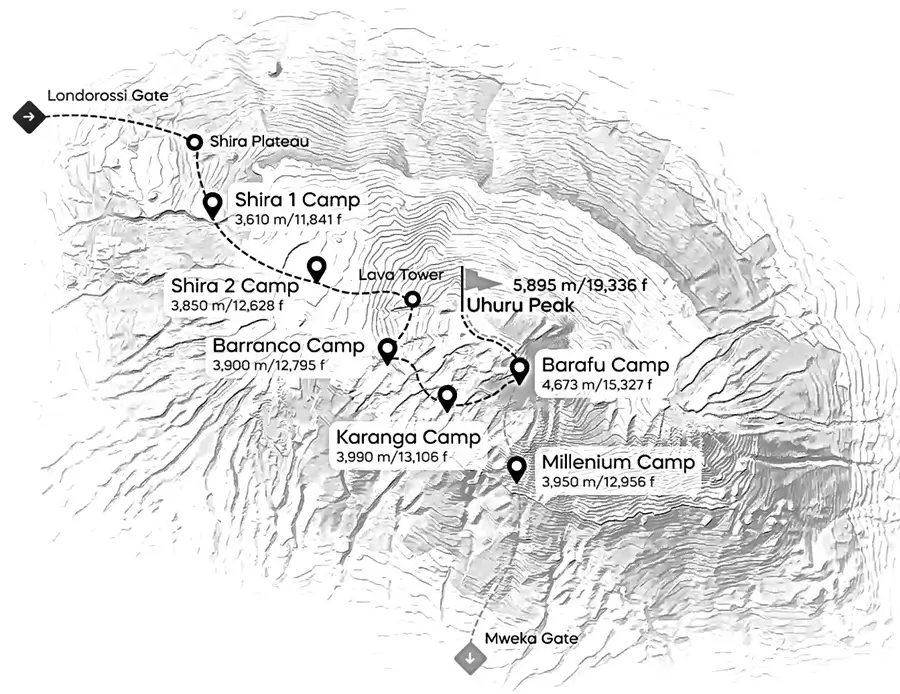
A guide and the mountain support team will meet you at the hotel in the morning for a brief orientation. Afterward, you will drive approximately 3–4 hours to Kilimanjaro National Park’s western entrance, Londorossi Gate. Following the completion of climbing permit formalities and registration with the search and rescue service, the journey continues by off-road vehicles to the drop-off point at 3,600 m (11,811 ft), where you will catch your first breathtaking glimpse of the Shira Plateau.
The trek from the drop-off to your initial high-altitude camp, Shira 1, involves a gentle ascent and is not physically demanding. This allows you to begin acclimatizing effectively. Upon arrival, the professional mountain crew will have already set up tents and started preparing dinner.
📒 PLEASE NOTE: This will be your first day at this elevation, so it is highly recommended that you follow these guidelines carefully:
Tanzania Bucket List takes pride in having the most skilled team on Kilimanjaro. Our guides and their mountain crews are seasoned professionals who have successfully led hundreds of expeditions.
All guides at Tanzania Bucket List bring over 5 years of hands-on experience leading treks on Kilimanjaro.
All our guides are certified Wilderness First Responders and fully equipped to handle any emergency.
On this day, you will set off from Shira 1 Camp in the morning and enjoy a gentle trek toward the next high-altitude stop: Shira 2 Camp. The hike is manageable and offers stunning views of the African savannah and Kilimanjaro’s distinctive flora. Shira 2 Camp provides one of the best vantage points on the journey to view Mount Meru, Africa’s fifth-highest peak and Tanzania’s second tallest, weather permitting.
Along the route between camps, our guides may lead an ascent of Cathedral Peak – 3,872 m (12,703 ft), one of the tallest points of the extinct Shira volcano. Beyond being a rewarding hike, reaching Cathedral Peak on a clear day delivers breathtaking views of the valley below. Should you prefer to skip this side trek or if weather conditions are unfavorable, you can head straight to Shira 2 Camp. This alternative does not affect acclimatization, as both Shira 2 and Cathedral Peak are at similar elevations. However, the Cathedral Peak hike is highly recommended.
Upon arrival at Shira 2 Camp, you will have lunch and then rest for about two hours. Afterward, everyone will embark on an acclimatization hike toward Lava Tower Camp, gaining approximately 200 m (656 ft) in altitude.
📒 PLEASE NOTE: The acclimatization walk is a gentle trek with a gradual rise in elevation, intended to support the body’s adjustment to higher altitudes.
Tanzania Bucket List is proud to be a recognized member of the Kilimanjaro Porters Assistance Project (KPAP). Read More
KPAP is dedicated to safeguarding one of the most vulnerable groups in Tanzanian society — the porters. A KPAP certification signifies that an operator values its staff, treats climbing teams with fairness, and ensures every expedition benefits the wider community in Tanzania.
After breakfast, you will depart from Shira 2 Camp and begin your trek toward one of the most significant points on the route: Lava Tower. This stretch involves multiple ascents and descents, ultimately reaching a camp situated at more than 4,600 m (15,091 ft) above sea level. The hike can be challenging, and it’s normal to feel some discomfort, but to properly acclimatize you’ll need to spend at least 1–2 hours here. For that reason, your group will pause for lunch at the summit of Lava Tower, allowing your body to adjust more effectively to the altitude.
Afterward, you will descend to Barranco Camp, where you’ll encounter the striking Barranco Wall, renowned for its towering height and steep face. The following day, you’ll climb it—though despite its daunting appearance, the trail is straightforward and very manageable.
On this day, your group will set out early. After enjoying a hearty breakfast, you’ll begin the ascent of Barranco Wall. We suggest leaving camp as soon as possible to avoid the crowds from other groups, which can slow down the pace. The climb up the gorge wall isn’t too challenging and usually takes about an hour. Once at the top, you’ll have time to rest and capture photos with the impressive Kibo volcano in the background.
Next, you’ll continue on a more demanding trek toward Karanga Camp. This stretch includes several ascents and descents, but there’s no need to worry—our experienced guides will set a comfortable and steady pace for everyone. Upon arrival at camp, a warm lunch will be waiting.
A few hours later, you’ll head out for an acclimatization hike in the direction of Barafu Camp, gaining about 200 m (656 ft) in altitude before descending back to camp for the night.
After enjoying a nourishing breakfast in the morning, you’ll set out on your trek toward Barafu Summit Camp. This site serves as the base for the final ascent to Uhuru Peak (5,895 m / 19,340 ft) – the ultimate destination of your journey. The Tanzania Bucket List team will have your camp arranged in advance, so upon arrival your tents and sleeping bags will already be ready. This allows you to simply relax and regain your energy. The rest of the day is best spent resting and sleeping in preparation for the night’s summit attempt.
Your team will set out from Barafu Camp at night to begin the final push toward Uhuru Peak on Mount Kilimanjaro (5,895 m / 19,340 ft). While the route itself is not technically difficult, the high altitude can make even normal movements feel exhausting. To ensure safety, climbers will be paired in twos and accompanied by a dedicated guide who will closely monitor both physical and mental condition throughout the ascent. After reaching Uhuru Peak, you may choose to descend briefly to the nearest glacier before returning to Barafu Camp. Following a short 2-hour rest, the journey continues downward to Millennium Camp.
📒 PLEASE NOTE: Keep in mind that most accidents—about 90%—happen during the descent, often resulting in injuries like broken arms or legs. Be especially mindful of your footing, as toenail damage is also quite common.
Millennium Camp rests within a lush tropical rainforest. Upon waking, you’ll notice the comfort brought by the lower altitude and the joy of having conquered the summit. After enjoying a hearty breakfast, the journey continues toward the park’s exit at Mweka Gate. Once the descent is complete, the group will reunite to celebrate your achievement, and you’ll have the opportunity to record your reflections in the guestbook. To conclude, you’ll receive a commemorative certificate at the Tanzania Bucket List office, followed by a transfer back to your hotel.
📒 PLEASE NOTE: Keep in mind that most accidents—about 90%—happen during the descent, often resulting in injuries like broken arms or legs. Be especially mindful of your footing, as toenail damage is also quite common.
Relax at the hotel before heading to the airport.
📒 PLEASE NOTE: Check-out time at the hotel is 11:00 AM. If you have an evening flight and require a later departure, you can extend your stay for an additional charge.
Arrival at Kilimanjaro International Airport (JRO), where you will be welcomed by a Tanzania Bucket List representative and transferred to your hotel according to the package. The hotel offers all the essentials for a comfortable stay: cozy rooms, hot water, friendly staff, a swimming pool, and Internet access. In the evening, there will be a briefing with our managers to ensure you are fully prepared for the climb.
Private tour packages include shared airport transfers for your group, while additional individual transfers will incur extra charges. To minimize costs, coordinate your group's arrival and departure times.
📒 PLEASE NOTE: Check-in starts at 2:00 PM.
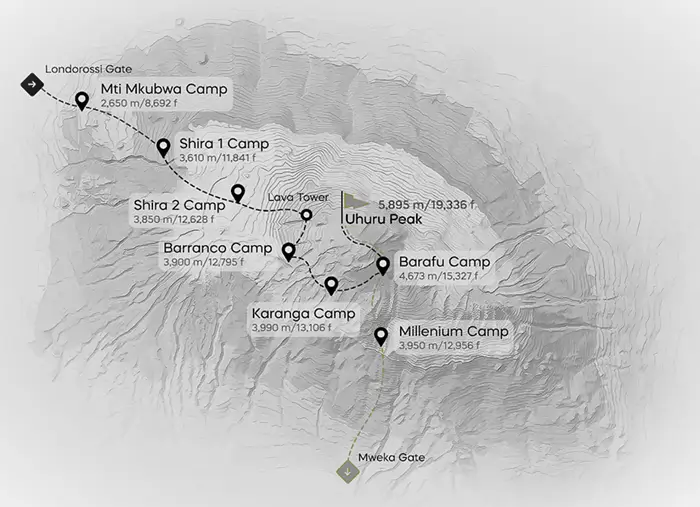
A guide and the mountain support team will meet you at the hotel in the morning for a brief orientation. You will then travel by vehicle for approximately 3–4 hours to the western entrance of Kilimanjaro National Park: Londorossi Gate (2,250 m / 7,381 ft). After completing the necessary formalities for climbing permits and registering with the search and rescue service, the trek begins toward the first camp of the route: Mti Mkubwa Camp (2,650 m / 8,694 ft). Raincoats are especially recommended on this day as you will pass through a rainforest. By the time you arrive, the professional mountain crew will have set up tents and started preparing lunch. Following lunch, the group will embark on an acclimatization hike to Shira 1 Camp, gaining 300 m (984 ft) in elevation, before returning to Mti Mkubwa Camp for a hot dinner.
📒 PLEASE NOTE: The acclimatization hike is an easy trek with a slight increase in altitude designed to help your body adjust faster. It’s important to take these hikes seriously, as they significantly improve your chances of reaching the summit of Kilimanjaro and protect you from altitude sickness.
Since this will be your first day at this elevation, it is highly recommended that you follow these guidelines:
Trekking from Mti Mkubwa Camp to Shira 1 Camp
Tanzania Bucket List takes pride in having the most skilled team on Kilimanjaro. Our guides and their mountain crews are seasoned professionals who have successfully led hundreds of expeditions.
All guides at Tanzania Bucket List bring over 5 years of hands-on experience leading treks on Kilimanjaro.
All our guides are certified Wilderness First Responders and fully equipped to handle any emergency.
On this day, you will rise early and enjoy a hearty breakfast before beginning your trek. Your group will ascend to an altitude of 3,610 m (11,843 ft), where you will be treated to breathtaking views of the Shira Plateau and Kibo Volcano for the very first time.
Overall, the journey from Mti Mkubwa Camp to the second high-altitude stop, Shira 1 Camp (3,610 m / 11,843 ft), is relatively easy and takes around 5–6 hours. This segment allows you to gradually start the acclimatization process, which is essential for a successful trek. Upon arrival at the camp, the team of specialists will prepare lunch, and you will have the opportunity to relax in your tent or explore the surrounding area.
📒 PLEASE NOTE:The acclimatization walk is a gentle trek with a gradual rise in elevation, intended to support the body’s adjustment to higher altitudes. Taking these hikes seriously is important, as they significantly improve your chances of reaching the summit of Kilimanjaro while reducing the risk of altitude sickness.
Tanzania Bucket List is proud to be a recognized member of the Kilimanjaro Porters Assistance Project (KPAP).
KPAP is dedicated to safeguarding one of the most vulnerable groups in Tanzanian society — the porters. A KPAP certification signifies that an operator values its staff, treats climbing teams with fairness, and ensures every expedition benefits the wider community in Tanzania. At Tanzania Bucket List, we are devoted to maintaining excellent working conditions for all team members — which is why top professionals choose to join us.
On this day, you will leave Shira 1 Camp (3,610 m / 11,843 ft) and trek toward the next high-altitude stop: Shira 2 Camp (3,850 m / 12,631 ft). The trail is manageable, offering stunning views of the African savannah, Kilimanjaro’s unique flora, and the surrounding landscape. Shira 2 Camp is the ideal spot on the trek to catch a view of Mount Meru (Africa’s fifth-highest peak and Tanzania’s second tallest), weather permitting.
During the journey between camps, guides may lead an ascent of Cathedral Peak – 3,872 m (12,703 ft) – one of the highest points of the extinct Shira volcano. Apart from being a captivating hike, reaching Cathedral Peak on a clear day rewards you with breathtaking valley views. In our experience, the valley below, which feels like a hidden world, is one of the most remarkable sights. The hike is straightforward, with no technical difficulties. While clouds may occasionally obscure the peak, it still provides excellent photo opportunities. If you prefer to skip this climb or encounter poor weather, heading straight to Shira 2 Camp is perfectly fine, as both locations are at similar altitudes and offer the same acclimatization benefits. Nonetheless, the Cathedral Peak hike is highly recommended.
Upon reaching the camp, you will have lunch, followed by a two-hour rest before an acclimatization hike toward Lava Tower Camp, which involves a 300 m (984 ft) gain in altitude.
After breakfast, you will depart Shira 2 Camp (3,850 m / 12,631 ft) and make your way to the highlight of the route: Lava Tower (4,600 m / 15,091 ft). This part of the trek involves several ascents and descents. Some sections may be challenging, and slight discomfort is normal, but spending at least 1–2 hours here is essential for proper altitude acclimatization, making it the perfect spot for lunch.
Next, you will descend to Barranco Camp (3,900 m / 12,795 ft), where you will encounter the famous Barranco Wall, awe-inspiring for its sheer size and steepness. You’ll be climbing it the following day, but there’s no need to worry—it follows an easy hiking trail that is not intimidating.
You will start the day early with a hearty breakfast before embarking on the hike up the Barranco Wall. It’s best to leave camp as early as possible to avoid the crowds from other groups, which can slow your progress. The climb up the gorge wall is manageable and takes roughly an hour. Once at the top, you can rest and capture some photos with Kibo Volcano as your backdrop.
Next, you will take on a more challenging trek to Karanga Camp, which involves several ascents and descents along the way. Don’t worry—our guides are skilled at maintaining a pace that suits the entire group. Upon arrival, a warm lunch will be served. After a short break, you’ll go on an acclimatization hike toward Barafu Camp, gaining approximately 200 m (656 ft) in altitude before returning to Karanga Camp.
In the morning, after a warm and satisfying breakfast, you will start your trek to Barafu Summit Camp. This camp serves as the launch point for the final night ascent to Uhuru Peak (5,895 m / 19,340 ft) – your ultimate destination. The team will have the camp fully prepared in advance, so upon arrival, your tents and sleeping gear will be ready, allowing you to unwind and rest. It is recommended to spend the rest of the day relaxing and getting sleep in preparation for the night summit.
Your group will leave Barafu Camp (4,673 m / 15,331 ft) during the night to begin the final push to the highest point of Kilimanjaro – Uhuru Peak (5,895 m / 19,340 ft). While the climb itself is not technically difficult, the high altitude makes even routine physical activity challenging. To ensure safety and support, each pair of climbers will be accompanied by a personal guide throughout the ascent to closely monitor both physical and mental well-being. After reaching Uhuru Peak, the summit of Mount Kilimanjaro and the endpoint of the Lemosho Route, you may take a moment to visit the nearby glacier if you wish. Afterwards, you will return to Barafu Camp for a 2-hour rest before continuing your descent to Millennium Camp (3,950 m / 12,959 ft).
📒 PLEASE NOTE: Keep in mind that most accidents—about 90%—happen during the descent, often resulting in injuries like broken arms or legs. Be especially mindful of your footing, as toenail damage is also quite common.
The Millenium Camp is nestled within a tropical rainforest. Upon waking, you’ll feel the relief of descending from high altitude and the satisfaction of reaching the summit. After enjoying a warm breakfast, you will make your way to the park’s exit at Mweka Gate (1,640 m / 5,380 ft). Once the descent is complete, the group will come together to celebrate your achievement, and you’ll have the opportunity to share your thoughts about the climb in the guestbook. Finally, you will receive your commemorative certificate at our office, followed by a transfer back to the hotel.
Relax at the hotel before heading to the airport.
📒 PLEASE NOTE: Check-out time at the hotel is 11:00 AM. If you have an evening flight and require a later departure, you can extend your stay for an additional charge.
Our classic adventures are exactly what most climbers seek. A blend of comfort and strict safety standards makes these Kilimanjaro hikes both enjoyable and unforgettable. This remains the most popular choice among our guests.
This climbing package provides everything a climber may require for the journey – skilled mountain crews, top-quality group gear, and meals planned by a nutritionist. Safety procedures are identical across all our hikes – only guides certified as Wilderness First Responders lead the groups. Additional safety measures include oxygen cylinders, fully equipped medical kits, and mandatory health checks conducted twice daily.
Each trekking group’s progress is monitored via GPS. You can share the link with your family and friends, allowing them to follow your journey in real time.
Before and after your climb, you’ll enjoy a comfortable hotel stay with attentive staff, hot showers, dependable Wi-Fi, a restaurant, and a swimming pool.
|
Lemosho Route price per person |
||||||||
|---|---|---|---|---|---|---|---|---|
|
|
1 pax |
2 pax |
3 pax |
4 pax |
5 pax |
6 pax |
7 pax |
8+ pax |
|
6 Days Trek (8-day tour) |
$3,543 |
$2,758 |
$2,512 |
$2,434 |
$2,368 |
$2,341 |
$2,270 |
$2,221 |
|
7 Days Trek (9-day tour) |
$4,074
|
$3,160
|
$2,903
|
$2,841
|
$2,783
|
$2,648
|
$2,561
|
$2,498 |
|
8 Days Trek (10-day tour) |
$4,723
|
$3,614
|
$3,255
|
$3,221
|
$3,130
|
$2,973
|
$2,911
|
$2,848 |
Our Kilimanjaro packages include all transfers listed in the itinerary. Upon your arrival at Kilimanjaro, a driver will meet you in a spacious and comfortable Toyota Alphard and take you to your hotel. The vehicles are equipped with roomy trunks for ample luggage space. Inside, you’ll find complimentary bottled water (specially arranged by Tanzania Bucket List), a Wi-Fi hotspot, and wet wipes for your comfort. Every vehicle is regularly inspected and maintained by our in-house technical team.
Our drivers are highly skilled, experienced, and fluent in English.
For your transfer to the trailhead of your climb, we provide Toyota Hiace or Coaster vehicles, designed to handle rugged terrain on the way to Mt. Kilimanjaro, ensuring both safety and reliability.
At the end of your trip, we also arrange your return transfer to Kilimanjaro International Airport. With this all-inclusive package, you can relax and focus on your adventure while we take care of your transportation.
The night before your climb and the night after your descent, you will stay in a 3* hotel in the Moshi Town area. By default, accommodations are in shared double occupancy rooms unless you request a single room supplement. Our first options are always Aishi Machame Hotel and Brubru Lodge, both owned and operated by Tanzania Bucket List. If these are unavailable, an alternative property of similar comfort and service will be provided. Each hotel offers everything a traveler might need: professional staff, a restaurant, a swimming pool, comfortable rooms with mosquito nets, laundry service, and complimentary Wi-Fi.
Aishi Machame is set in a peaceful, green rural area, just 23 km (14.3 mi) from Moshi, often visited by monkeys, mongooses, and other wildlife that can be observed from the restaurant terrace during breakfast. This location is ideal for travelers seeking tranquility. Our office and rental gear store are also located here.
Brubru Lodge is located in the quietest part of Moshi, known as Shanty Town, and is perfect for those who want to be closer to city life, exploring local cafes, shops, and nightlife. Any gear you need from our Aishi Machame store can be delivered to Brubru Lodge by our managers for your orientation briefing.
Our packages include bed and breakfast by default. Lunch and dinner can be ordered directly at the hotel restaurants, which serve carefully prepared à la carte meals blending European and local cuisines.
Note: You will share a room with your travel companion or, if traveling solo, with a same-sex traveler. If you prefer a single room, please request a single supplement as early as possible, as hotel rooms fill up quickly. If you choose to descend earlier than planned, charges for any additional nights at the hotel will apply. Contact your travel consultant to arrange a single room.
The day before your climb, our managers will meet you at your hotel for an orientation briefing, and a car will transport you to the start of your Kilimanjaro adventure.
Tanzania Bucket List provides a Kilimanjaro adventure equipped with all essential amenities for a safe and comfortable camping experience.
Comfortable and reliable Kilimanjaro tents
For every expedition, we use durable 4-season tents designed to keep you warm at night and protected from rain. Each tent includes a buffer zone for removing dusty boots and rain gear before entering. This tent model has been trusted for years without any issues.
Although designed for three people, we accommodate no more than two per tent. There’s ample room for two people and their duffel bags to stay comfortable. You’ll share the tent with your travel companion, and solo travelers will be paired with a same-sex tent mate.
A private tent is also available upon request. An additional fee applies to cover the wages and meals of the extra porter carrying it. Contact your expedition manager for more information.
What our standard tents look like
Larger walk-in tent option
We also offer a premium, extra-comfort model large enough to fit camping cots. It is currently the most comfortable option on Kilimanjaro and is available for an additional fee to cover the extra porters required.
What our walk-in tents look like
Thick sleeping mats
Our hikes include 3-inch sleeping mats, crafted by our tailor shop located at the Machame climbing base.
Camping tables with stainless steel cutlery and ceramic crockery
Tables are set and cleaned by a dedicated kitchen crew at every meal. At Tanzania Bucket List, we avoid disposable tableware to reduce plastic waste.
Spacious mess tents
Manufactured by RedFox, a trusted outdoor equipment brand, our dining tents are sturdy, wind- and rainproof, ensuring a comfortable dining and social experience, even in harsh weather.
Foldable camping chairs
Our durable chairs provide excellent back and arm support, perfect for relaxing in the mess tents or enjoying a sunset at the camp’s edge.
Handwashing stand
Regularly filled with hot water by the camp crew, our handwashing stands help you stay clean during your expedition.
Camp managers arrive hours before your group to select the most scenic, private location. They oversee all tents and equipment to ensure smooth operations. Each carries a repair kit, although inspections prior to the expedition make urgent fixes rare.
Our mountain chefs and waiters will take care of preparing and serving your breakfasts, lunches, and dinners throughout the adventure. The menu has been carefully designed with input from a professional dietitian to ensure meals are both flavorful and energy-packed, giving hikers the nutrition they need.
At Tanzania Bucket List, we recognize that everyone has unique dietary requirements. That’s why we offer vegetarian, vegan, gluten-free, lactose-free, and other specialized meal plans for our mountain adventures. Just inform your manager, and our mountain chef will craft a meal tailored to your needs. Best of all, choosing a special meal plan comes at no extra cost.
For breakfast, you can expect options like porridge, vegetables, eggs, sausages, sweet potato, spinach prepared in a local style ("mchicha"), along with coffee or tea. Lunch typically includes a variety of soups (butternut, tomato, leek, vegetable, beef), spaghetti, stews, avocado salads, mashed potato, fried chicken with coconut, tomato, garlic, or other sauces, minced meat in tomato sauce, and other popular local and international dishes.
Dinner may include soup; vegetable salad (locally known as "Kachumbari"); Mexican-style salad with tomatoes, corn, onion, and avocado; hearty stews such as bamia; fried vegetables; and main dishes featuring chicken, beef, or fish. All meals come with flavorful sauces, and extra seasonings are always available. After each meal, our waiters serve fresh local fruits—mangoes, oranges, pineapple, and bananas—to give hikers a natural vitamin boost.
We source organic, locally grown fruits, vegetables, and meat from nearby farms. Each supplier is carefully checked to ensure certification by the Tanzania Food and Drugs Authority (TFDA). Tanzania Bucket List prefers working with small local farms rather than large commercial producers, ensuring fresh, organic produce while supporting the local economy.
Our mountain chefs prepare all meals during the expedition, except for lunch on the first day, which is served after entering the park and before reaching the first camp where our kitchen is set up. This first lunch is prepared by the chefs at Aishi Machame Hotel and packed in sturdy compostable packaging from Vegware, our UK-based eco-friendly supplier.
When assessing the quality of our meals on Kilimanjaro, please remember that our team works under challenging conditions. Meals are prepared in a camp kitchen using a camping gas stove with electric torch lighting. Weather can be harsh—wind, rain, or cold during certain months—and these conditions can sometimes affect the appearance and texture of our dishes. Nonetheless, our mountain chefs strive to deliver delicious and visually appealing meals, and we work hard to maintain high standards despite the demanding environment.
On your adventure, you will be guided by our exceptional Kilimanjaro mountain guides.
Rich experience
Each guide brings at least seven years of experience and possesses in-depth knowledge of Mt Kilimanjaro’s terrain, flora, and fauna. They have led some of the most remarkable expeditions on the mountain, including Wings of Kilimanjaro and Red Bull’s Kilimanjaro wingsuit BASE jump, achievements that remain unmatched. They also participated in Nimsdai’s (aka Nirmal Purja) high-speed Kilimanjaro ascent, as featured in the Netflix documentary "14 Peaks: Nothing is Impossible."
Wilderness First Responder certifications
Your safety is a top priority: all our mountain guides hold Wilderness First Responder (WFR) certification. This accreditation, issued by the independent USA-based organization Wilderness Medical Associates, ensures they are fully trained to handle emergencies in the wilderness. This WFR credential, combined with their extensive knowledge of the mountain routes, is a requirement for anyone taking a leadership role in our expeditions.
Excellent story-telling skills
Our guides are natural storytellers and will delight you with Kilimanjaro legends and tales. You will gain insights into the plants, wildlife, and history of the world’s highest free-standing mountain. For those curious about local culture, lifestyle, and customs, our team is an invaluable source of knowledge.
At the same time, the guides are mindful and know when to step back, giving you the peace and solitude to enjoy nature on your own. Whenever you seek a moment of quiet, they will quietly retreat into the background.
A large skilled support team
Guides are supported by a dedicated team of porters, camp managers, and crew members. They prepare the camps ahead of your arrival, fetch water from mountain streams, and carry all expedition supplies and equipment. Meanwhile, the mountain chefs manage the camp kitchen, providing nutritious and delicious meals throughout the trek.
A happy and well-cared-for team
Tanzania Bucket List is committed to paying some of the highest wages in the Tanzanian tourism industry to our mountain crews. Each team member receives an individual bank account to ensure transparent and accountable salary payments. Taking excellent care of our crews is a cornerstone of our operations.
Thanks to this approach, our guides receive glowing reviews daily and are a major reason we are ranked as the #1 Kilimanjaro trekking company on TripAdvisor.
Tanzania Bucket List is also a member of the Kilimanjaro Porters Assistance Project (KPAP), an independent organization advocating for the fair treatment of Kilimanjaro porters. KPAP certification confirms our ethical practices and commitment to providing porters with a safe and supportive working environment.
We provide bottled oxygen on every Tanzania Bucket List expedition. Our guiding team uses it to make high-altitude acclimatization smoother and to help prevent acute mountain sickness (AMS). Guides administer bottled oxygen as soon as a climber shows the first signs of AMS, which usually stabilizes oxygen levels and allows the journey to continue.
At Tanzania Bucket List, oxygen supplies are never in shortage. In the rare event that a team needs a larger quantity, other crews from the same camp step in to share their stock. As the largest operator on Kilimanjaro—managing 15% of all global expeditions—we always have multiple teams stationed across different camps. On top of that, we can arrange rapid delivery from our climbing base in under six hours.
While many Kilimanjaro operators claim to carry oxygen, the real difference lies in how it is used. Most companies only provide it at the advanced stages of AMS, when evacuation becomes the only option. Tanzania Bucket List, however, uses bottled oxygen as a preventative measure. This proactive approach makes acclimatization less stressful, reduces AMS cases significantly, and increases summit success.
Today, Tanzania Bucket List is the most oxygen-focused trekking outfitter on Kilimanjaro. We even employ a dedicated staff member responsible solely for managing oxygen storage—ensuring bottles remain filled, valves function properly, and each crew receives an adequate supply. At present, we maintain 350 portable oxygen systems for expeditions.
Each trek is supported by a dependable GPS tracking system, enabling real-time monitoring of our Kilimanjaro teams. Beyond serving as a vital safety measure, these GPS links also offer reassurance to your family and friends, who can follow the hikers’ journey from afar.
On the morning your Kilimanjaro adventure begins, our trip consultant will provide you with a QR code that generates a GPS link when scanned. This link will also be available in your personal account on the Tanzania Bucket List Personal Trip Board.
Every morning and evening during the trek, our WFR-certified guides conduct medical check-ups to make sure both hikers and crew members (including porters, camp managers, and chefs) are adjusting well to the altitude. During these assessments, the guides will ask general health questions and measure your oxygen saturation level. In certain cases, they may also check blood pressure or use a stethoscope to monitor your lungs and breathing.
It is mandatory for all hikers to attend these check-ups, even if they feel perfectly fine and show no signs of altitude-related issues. These sessions help our guiding team detect the early stages of AMS (Acute Mountain Sickness) and take preventive measures to ensure everyone is acclimating properly, making the journey both safe and enjoyable.
At Tanzania Bucket List, we are experienced in supporting climbers with different health conditions such as diabetes, asthma, and others. We have established specific protocols to provide the necessary care and assistance for such climbers during the expedition. We understand that summiting Mt. Kilimanjaro can be particularly demanding for those with underlying health challenges, which is why we work closely with each participant to create a tailored plan that ensures safety and comfort throughout the climb.
If our guides have any concerns about a hiker’s health, they use the Lake Louise Acute Mountain Sickness scoring system and, when needed, consult with our company doctor before deciding whether it is safe to continue the ascent. With our extensive medical kits and skilled guides, the well-being and safety of our climbers remain our highest priority.
Our in-house doctor thoroughly reviews all pre-departure health forms submitted on the Tanzania Bucket List Personal Trip Board. This ensures that every participant is properly prepared for the adventure and receives any necessary health-related recommendations in advance.
Our ultimate goal is to make your Kilimanjaro experience both safe and unforgettable. To achieve this, we strictly follow our safety protocols and always prioritize your health on the mountain.
At Tanzania Bucket List, we also keep a dedicated medical record for each participant, documenting all essential health details throughout the climb. This record becomes an invaluable resource for doctors in the rare event that hospitalization is required during the expedition.
Your personal medical information remains strictly confidential and is shared only when necessary with medical professionals.
All our journeys are supported with a satellite phone. Your guide carries it to maintain emergency contact with our head office at the Aishi Machame climbing base whenever standard mobile coverage is unavailable. This guarantees a swift response from our 24/7 safety team.
Please note: The satellite phone is intended mainly for emergency situations. If you’d like to keep in touch with family, friends, or colleagues through a satellite connection, you can rent a personal device for your own use. Contact our travel specialists for details.
Tanzania Bucket List maintains the highest standards for hikers’ health and safety, which is why every climbing crew is equipped with multiple medical kits. These include large “camp” kits stocked with medication for a wide range of mountain-related conditions. With 49 different types of items and medicines, they are among the most comprehensive emergency kits available in Tanzania.
Alongside the group kit, each guide also carries a tactical medical pack containing hemostatic plasters, tourniquets, pain relievers, and other essentials needed during emergencies or while moving between camps. Our guides are always ready to handle twisted joints, strained muscles, and other injuries that may occur on the trail.
Having operated in Tanzania for nearly a decade, we’ve never had to use a medical kit to its full extent. Still, we believe that thorough preparation is one of the key reasons why Tanzania Bucket List offers the safest Kilimanjaro climbs.
Additionally, we provide our clients with access to a VIP ward at KCMC hospital, kept on standby for cases of altitude-related illness. Here, they receive priority medical care without waiting in the emergency queue, along with the support of a personal nurse. In the rare event that hospitalization is necessary, clients are treated to regular food and drink deliveries from our Moshi restaurant, and a dedicated manager is always available to assist. The ward also features reliable, complimentary Wi-Fi.
Tanzania Bucket List Kilimanjaro expeditions cover all mandatory park fees required for every climber. These include charges such as camping and conservation fees, rescue fees, crew fees, forest fees (on certain routes), and other applicable costs. Together, these account for nearly half of the total trip price and are part of the reason why climbing Mt. Kilimanjaro is generally more expensive compared to many other popular travel destinations.
As a transparent and law-abiding operator, Tanzania Bucket List fulfills all tax obligations in Tanzania, including VAT (18%), corporate income tax (30%), labor-related contributions and duties, licensing fees, and social security payments for our staff—all of whom are officially employed by the company. We take pride in being among the few tour operators in Tanzania that fully comply with these requirements.
The taxes we contribute directly support the improvement of local communities. In 2022 alone, the company paid over $500,000 in taxes and related levies.
When you book with Tanzania Bucket List, your journey will be handled by a team of 200 dedicated professionals committed to making your experience unforgettable. Our team comprises specialists in reservations, transfer planning, expeditions, customer service, logistics, and other key areas, each ensuring their part of the process runs smoothly. In addition, we have extensive hotel, storage, and transfer teams whose efforts are vital and always on standby. Together, they work seamlessly to ensure every detail of your trip is meticulously planned and executed to the highest standard.
Our travel consultants are available around the clock to assist you. You can easily reach your manager via messenger, email, phone, or any method that suits you. We’re always ready to answer your questions and resolve any concerns, with our support team operating across multiple time zones.
Tanzania Bucket List is the first adventure operator in Tanzania to create its own travel planning software. With this innovative system, you no longer have to send long lists of information via email. Instead, you can simply complete the Personal Trip Board in the Tanzania Bucket List travel portal.
This intuitive platform lets you provide details about any gear you'd like to hire for your climb, arrival and departure times, dietary preferences, insurance and passport details required for permits and summit certificates. You can also use the form to share information about allergies or other medical considerations that our team should know before your adventure begins.
The security of your personal information is a top priority. The system is fully secure and uses SSL encryption powered by Cloudflare Inc., a global leader in cloud security. This ensures that all data transmitted is encrypted and protected. Only authorized personnel at Tanzania Bucket List will have access to your information.
Unlike other companies where a sales manager serves as a middleman between you and the local operations team, our system sends your information directly to the relevant dashboard. This direct communication greatly reduces the possibility of human error.
For example, if you provide your arrival time in the system, previously a manager would have had to manually enter it into the calendar, and a transfer manager would assign a driver. With many visitors arriving in Tanzania, mistakes were always possible.
Now, your arrival time is instantly transmitted to the transfer manager’s dashboard. The system automatically assigns an available driver and activates GPS tracking to monitor progress. If the driver misses any checkpoints, the system alerts the manager to ensure timely pickup.
We apply the same streamlined process to all aspects of your trip. Your medical information is sent directly to our in-house expedition doctor, and your dietary requirements are shared with the camp kitchen team. This ensures every detail is managed efficiently, with zero risk of losing important information.
Additionally, the system makes travel planning engaging and enjoyable. Beyond the intuitive interface, it features a gamified experience: as you complete the required trip information, pop-ups provide interesting facts about African wildlife. You can learn more about the animals you’ll encounter during your adventure while organizing your trip.
At Tanzania Bucket List, we believe travel planning should be simple, enjoyable, and informative. Our innovative system is just one of the ways we deliver exceptional service to every traveler.
We understand that some items you bring to Tanzania may not be necessary for your Kilimanjaro climb, such as suitcases, safari clothing, laptops, gadgets, or important documents. We recommend taking only what is essential for your mountain expedition and leaving fragile or easily stained belongings in our storage facilities or safe room.
The use of a storage room and safe room is completely free of charge.
To give you peace of mind while exploring Kilimanjaro, we have set up a secure storage facility where you can safely leave all your suitcases and handbags. The facility is dry, well-ventilated, and accessible only to Tanzania Bucket List staff.
For items that need special care, such as cash, jewelry, passports, gadgets, and other valuables, Tanzania Bucket List provides space in our safe room. This room is under 24/7 video surveillance and protected by armed guards. It features a fire-proof door with a 120-minute fire resistance rating, 10-inch brick walls, and a highly sensitive alarm system.
You won’t need cash while on Kilimanjaro, as there are no shops, vending machines, or other places to spend money. The Mount Kilimanjaro National Park Development Plan strictly prohibits any commercial facilities within the park.
The small souvenir shop at Mweka Gate—the exit point for most trails—is the only nearby place to buy souvenirs. Local artisans sell their goods there, which may interest some hikers. However, we recommend bringing no more than $100, as larger and more diverse souvenir shops are located in Arusha. If you plan to spend more, those shops offer better selection and prices.
If you wish to deposit valuables with us, you’ll need to itemize them and complete a special form. For cash deposits, we use a counting machine and provide a receipt listing the cash left in our care. You sign the receipt, and it is sealed in your presence.
To ensure full transparency, the process is recorded with a high-resolution camera, and all records are deleted 30 days after your departure from Tanzania.
Our safe room is insured for $600,000 in emergencies, but in nearly ten years of operation in Tanzania, we have not had a single insurance claim.
At Tanzania Bucket List, we pride ourselves on offering eco-friendly treks. Our mission is to leave Kilimanjaro cleaner after each expedition. To accomplish this, we assign a dedicated team to ensure that both our climbing crew and guests leave no waste behind. This team also collects any litter left by other groups, helping to preserve Kilimanjaro’s pristine beauty, just as it was during the era of Hans Meyer and Ludwig Purtscheller, the first Europeans to reach the summit.
We are also committed to reducing plastic usage on our expeditions whenever possible. For example, the packaging for the first day’s lunchbox (hot lunch is provided on all other days) is fully compostable. We source this packaging from Vegware, a leading UK company known for its environmentally conscious food packaging.
When you choose Tanzania Bucket List for your adventure, you're helping support the development of local communities in Kilimanjaro. We are dedicated to sustainability and allocate a portion of our profits to various social responsibility initiatives. Here are some examples:
Our guides frequently assist in firefighting efforts on the slopes of Kilimanjaro. Climate change is affecting even remote areas like Tanzania, and unfortunately, bushfires have increased in recent years. When two major fires broke out on Kilimanjaro in 2020 and 2022, our expeditions team was among the first to respond. Later, it was revealed that our strong team of 150 porters was larger and more effective than all other crews combined.
We're proud to be among the initial supporters of the Serengeti De-snaring Project, a conservation initiative led by the Frankfurt Zoological Society. The project focuses on removing snares, traps, and other poaching devices from Tanzania’s national parks.
Tanzania Bucket List is a member of the Kilimanjaro Porters Assistance Project (KPAP), which promotes fair treatment for porters and certifies tour operators meeting its standards. Our certification reflects that we provide fair wages, nutritious hot meals, and proper care and protection for our team members. More details about KPAP’s work can be found on their website.
To combat deforestation, we have implemented several large-scale tree-planting initiatives on the foothills of Mount Kilimanjaro and surrounding regions. Additional reforestation projects are currently being planned.
Tanzania Bucket List is dedicated to improving the lives of students in the remote Materuni area. Over 50 local students attend a school with dilapidated classrooms, a leaking roof, and limited educational resources. Despite their best efforts, teachers struggle to maintain a supportive learning environment. We stepped in to fund renovations, provide building materials, educational resources, and sports equipment, aiming to create a brighter future for these children.
In 2023, we collaborated with Nature Tanzania, investing over $12,000 to protect the Long-billed Forest Warbler. A dedicated conservation site has been set up in the Amani Forest, where our team conducts research and conservation operations. With fewer than 250 birds remaining, this species is classified as ‘critically endangered’ by the International Union for Conservation of Nature, and urgent measures are needed to prevent extinction.
Finally, we are committed to sourcing from local suppliers, deliberately prioritizing small farmers over large agricultural companies.
At Tanzania Bucket List, we support only projects that make a meaningful impact on local communities. Each application from NGOs or eco-activists is carefully reviewed by our board before funding is allocated.
By joining our climbs, you directly contribute to positive change in the communities around Mount Kilimanjaro. More information about the social responsibility initiatives you’ll be supporting can be found on this page of our website.
Our Kilimanjaro packages do not cover international flights. You will need to arrange and pay for these separately. You can reach out to your manager for suggestions on airlines that fly to Tanzania.
Tipping your climbing team is a common practice in mountain hiking worldwide. While it is not required at Tanzania Bucket List, clients are welcome to tip their mountain crew if they feel the service met or exceeded expectations. The suggested amount is USD 250–350 per participant.
Most nationals need to pay USD 50 for a single-entry, 90-day visa. USA nationals, however, must pay $100 for a multi-entry visa. Reach out to our travel advisors to learn more about Tanzania visa rules and requirements.
When climbing Mount Kilimanjaro, you will need personal equipment such as hiking boots, sleeping bags, trekking pants, thermals, and trekking poles. See the full list here.
As of now, Tanzania Bucket List’s gear rental shop is the only rental service on Kilimanjaro where climbers can hire all the equipment needed for their adventure. All our gear comes from top brands like The North Face, Black Diamond, RedFox, Columbia, Marmot, Mountain Hardwear, and more.
If you plan to rent equipment from us, you can submit a list of everything you need through your Tanzania Bucket List portal account, and we will have everything ready for you before you arrive in Tanzania.
Our group adventures feature shared accommodation, meaning you’ll share a hotel room or tent with either your travel companion or a same-sex member of your group. If you’d like a private room or tent, please inform us in advance. Single supplements are available for an extra fee. Please note that single supplements are not available on the Marangu route, where overnight stays are in huts accommodating up to 20 hikers.
Travel insurance is not included in our climbing packages. For Kilimanjaro and Meru hiking adventures, all participants must have travel insurance that covers trekking at altitudes of up to 6000 meters, including helicopter evacuation. Since insurance requirements and costs differ between countries, please consult your insurance provider to ensure these conditions are met and to confirm the exact costs.
Currently, the cost of portable toilets is not included in the tour package to help keep trip expenses low. Public restrooms can be found at camps along the route. However, for those who value extra comfort, renting a portable toilet is highly recommended. You can reach out to our consultants at Tanzania Bucket List for more information. Please note that portable toilets are not available on the Marangu route due to Kilimanjaro National Park regulations.
Accommodation at the hotel is provided on a bed & breakfast basis. This means that lunch and dinner are not included and can be purchased either at the hotel’s restaurant or at any other dining spot in Moshi if you choose to eat out.
You may be wondering which Lemosho itinerary suits your adventure best: the 7-day or 8-day option. The 7-day plan starts at 3,414 m (11,200 ft), giving you a head start on acclimatization. This allows more time at higher altitudes, though the faster ascent may be challenging for some hikers. Additionally, the first two days involve relatively easy hikes with minimal altitude gain.
On the other hand, the 8-day route begins at 2,100 m (6,889 ft) and presents a more demanding first day. Starting lower provides a gentler acclimatization process and the chance to trek through lush rainforest. Both options are highly recommended for climbers of all experience levels, offering excellent acclimatization, summit success rates exceeding 90%, and some of the most scenic trails on Kilimanjaro.
The Lemosho 8 route showcases breathtaking landscapes and, like the Northern Circuit 8, provides a favorable profile for acclimatization. In comparison, the Northern Circuit offers panoramic views of Kilimanjaro from all four sides but is generally considered less visually striking. This is largely because the northern slopes receive less rainfall, resulting in sparser and less varied vegetation. Another point to note is that the Northern Circuit tends to be much quieter, while Lemosho is currently among the three most popular routes on Kilimanjaro.
Due to its length, the Northern Circuit is better suited for hikers with higher endurance who are comfortable with longer daily treks. Moreover, if you prefer to avoid the Barranco Wall, the Northern Circuit allows for that. Both trails are accessible without technical skills or intensive training and provide excellent acclimatization opportunities. The summit success rate is slightly higher on Lemosho, primarily because some hikers may tire on the longer Northern Circuit route.
The 8-day Lemosho route itinerary covers roughly 70 km (43 miles), whereas the 6- and 7-day options span about 56 km (35 miles). This positions Lemosho in the middle range when compared to the lengths of other Kilimanjaro routes.
The 8-day itinerary starts at Londorossi Gate (2,250 m / 7,381 ft), while the 6-7 day options begin with a vehicle drop-off at 3,414 m (11,200 ft) on the Shira Plateau.
Yes, the Lemosho route passes through the Barranco Wall. However, it often looks more intimidating than it actually is. Many experienced climbers have managed it without much trouble! For more details, check out our guide on the Barranco Wall.
The climb is moderately challenging, but it’s well within reach for the average person in decent shape. Remarkably, it stands out as the top choice for beginners, boasting the highest success rates.

We are always here to help.
We are always here to help.